
What to do after a storm passes
The wind has stopped, but the work is just starting. This is the step-by-step guide Southeast Florida homeowners use to stay safe, protect their home, document the damage, handle the insurance claim and get the roof fixed right, from the first hour to the final repair.

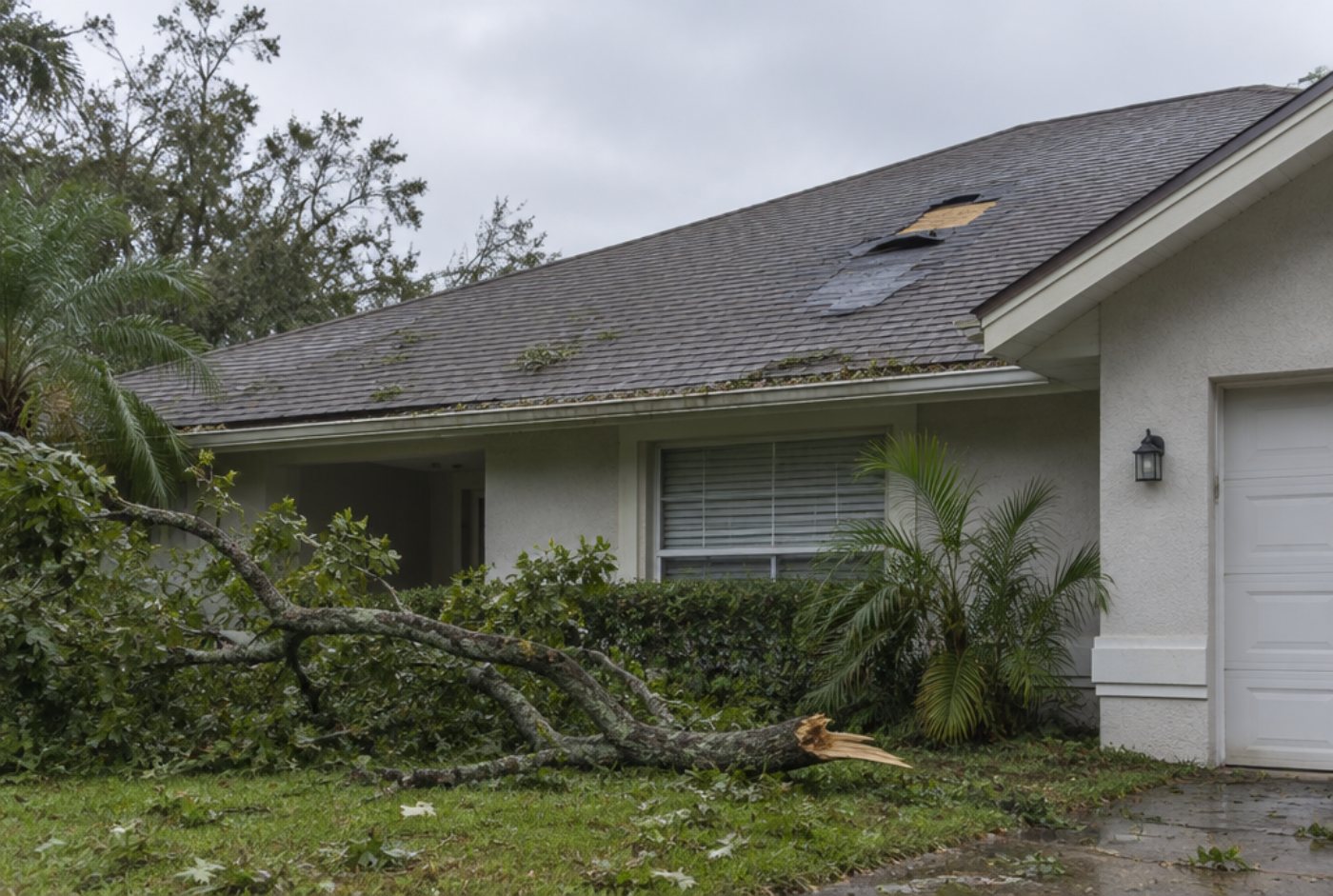
Safety first, before you go outside
Storm damage can be more dangerous after the storm than during it. Take ten minutes to check for the hazards below before anyone walks around the property.
- Wait for the official all-clear. Stay inside until local officials and weather alerts say the storm has fully passed. The back half of a hurricane can be as strong as the front.
- Treat every downed line as live. Stay at least 35 feet away, keep kids and pets back, and call 911 and your utility. Never touch a fence, puddle or tree that is touching a wire.
- Smell gas? Leave. If you smell gas or hear hissing, get everyone out, do not flip switches, and call your gas company or 911 from outside.
- Stay out of standing water. Floodwater can hide debris and electrical current and is often contaminated. Never drive through flooded roads.
- Check trees and structures. Look up for hanging limbs and leaning trees. Do not enter a home with a sagging ceiling or visible structural damage.
- Use generators outdoors only. Run them at least 20 feet from windows and doors. Carbon monoxide kills more people after storms than the wind does.
- Wear protection. Closed-toe boots, long pants and gloves guard against nails, glass and insulation fibers.
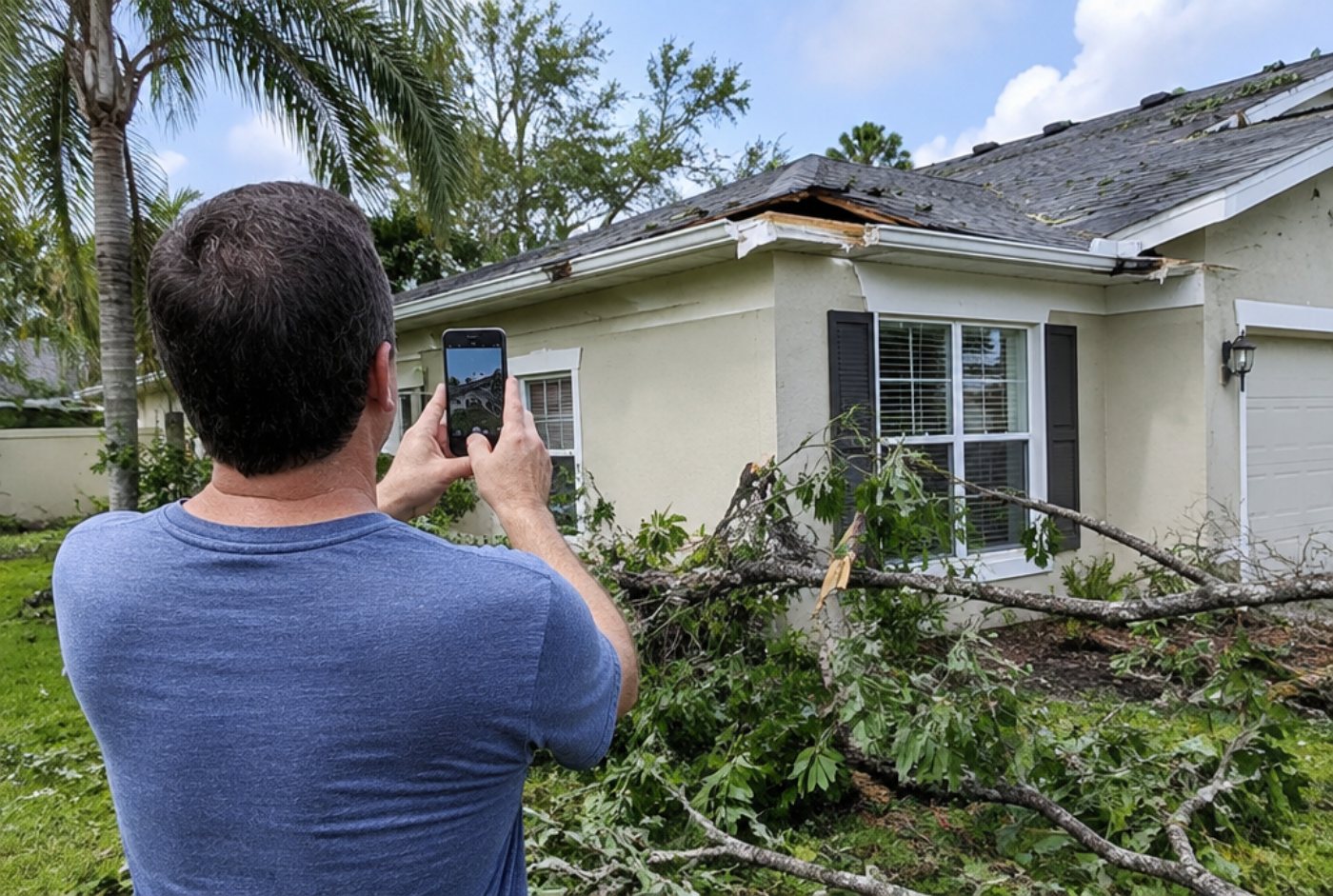
Walk the property and document everything
Once it is safe, do a slow lap around the house from the ground. Your goal is a complete record of the damage before anything is moved, cleaned up or repaired.
- Start wide, then go close. Shoot each side of the house from a distance, then close-ups of every damaged area with something in frame for scale.
- Take video too. Narrate a slow walkthrough, outside and inside, saying the date, the address and what you see.
- Photograph the surroundings. Fallen trees, fences, neighbors' debris and standing water show how severe the storm was at your address.
- Make a written list. Roof, gutters, screens, windows, doors, soffits, siding, fences and any damaged contents with the approximate age and value.
- Keep damaged materials. Do not throw away shingles, tiles or other debris until your adjuster has seen it or you have photographed it thoroughly.
- Save every receipt. Tarps, plywood, hotel stays, food and cleanup supplies are often reimbursable. Keep them together in one folder.
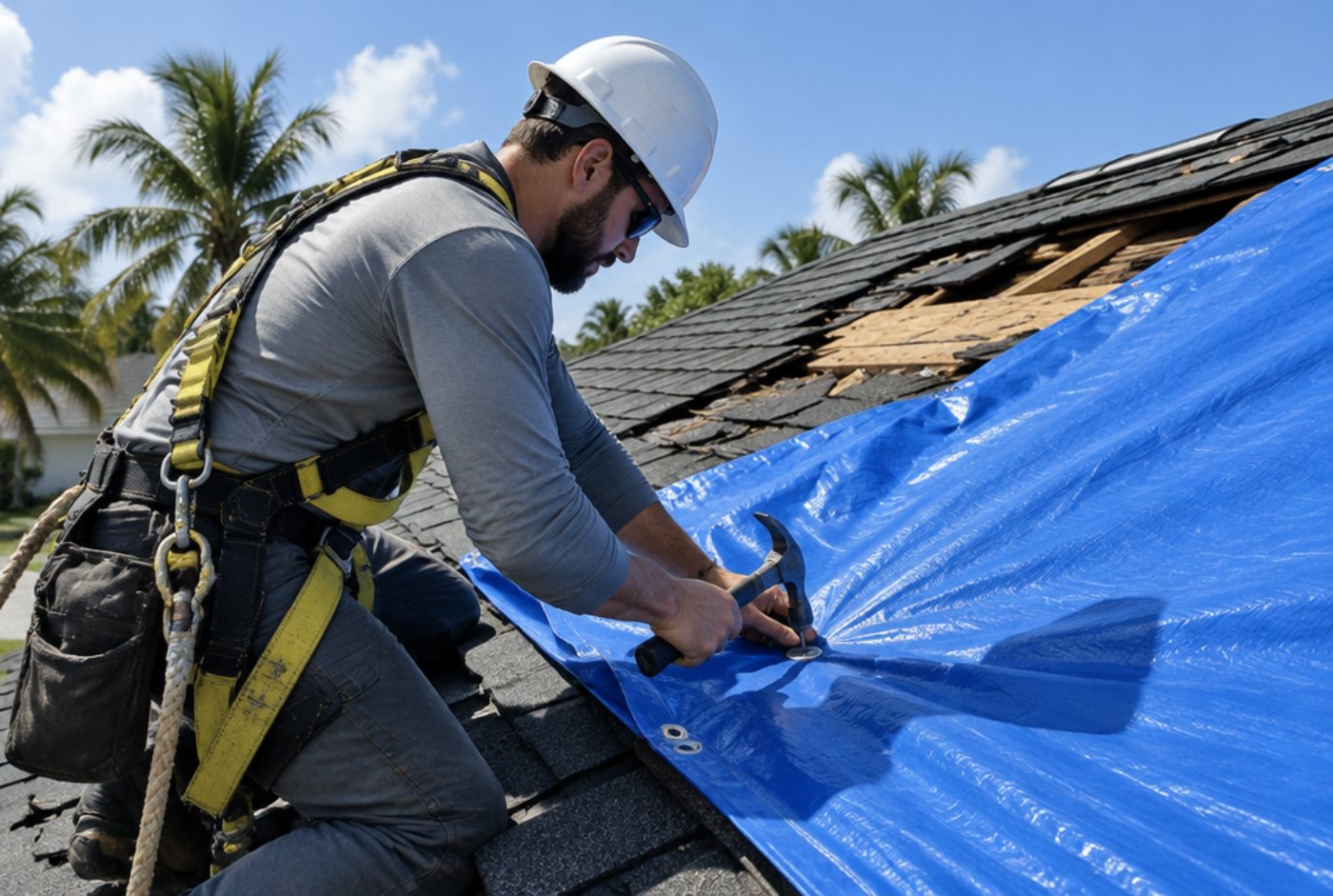
Stop further damage with temporary repairs
Most insurance policies require you to take reasonable steps to prevent more damage, and the cost of those steps is usually part of the claim. Mold can start within one to two days, so move fast.
- Cover the roof. Have a licensed crew install a properly secured tarp or temporary patch over any opening. Do-it-yourself tarps blow off and cause more damage.
- Board up broken windows and doors with plywood, and close up any other openings.
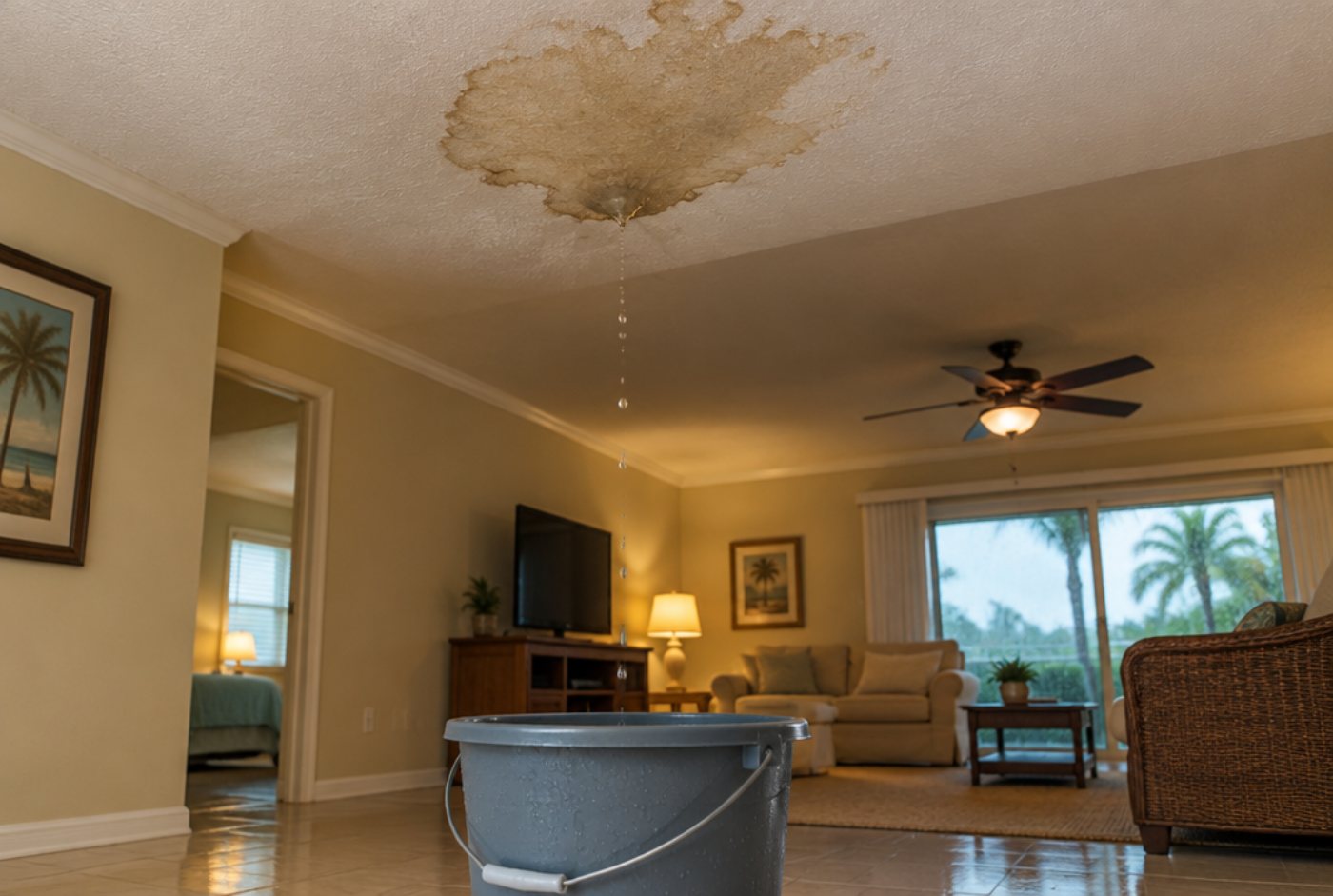
- Contain interior leaks. Use buckets, move furniture and electronics, and lift rugs. A drip bucket protects floors while you wait for the roofer.
- Shut off power to rooms with wet ceilings or water near outlets, fixtures and fans.
- Dry it out. Run fans and dehumidifiers, remove soaked insulation and carpet where it is safe, and open windows when the weather allows.
- Do not make permanent repairs yet. Hold off until the damage is documented and your insurer has been notified.
Call your insurance company and open a claim
Report the damage as soon as it is safe to do so. You do not need a repair estimate to open a claim, and opening one does not commit you to anything.
- Have your policy number ready along with the date of the storm, the address and a short description of what you found.
- Ask about your hurricane deductible. Florida policies often use a separate percentage deductible for named storms, so know your number before you decide how to proceed.
- Get a claim number and write down the name of every person you speak to, plus the date and time of the call.
- Send your photos and video to the adjuster in writing and keep copies of everything you submit.
- Mind the deadlines. Florida law sets strict time limits for reporting a new claim and for filing supplemental claims, and they were shortened in recent years. Confirm the current limits with your insurer and do not wait.
- Be present for the adjuster visit. Walk the adjuster through every item on your list, including the interior damage and the temporary repairs you made.
- Get it in writing. If you disagree with the estimate, ask for a line-by-line explanation and a licensed roofer's report to support your position.
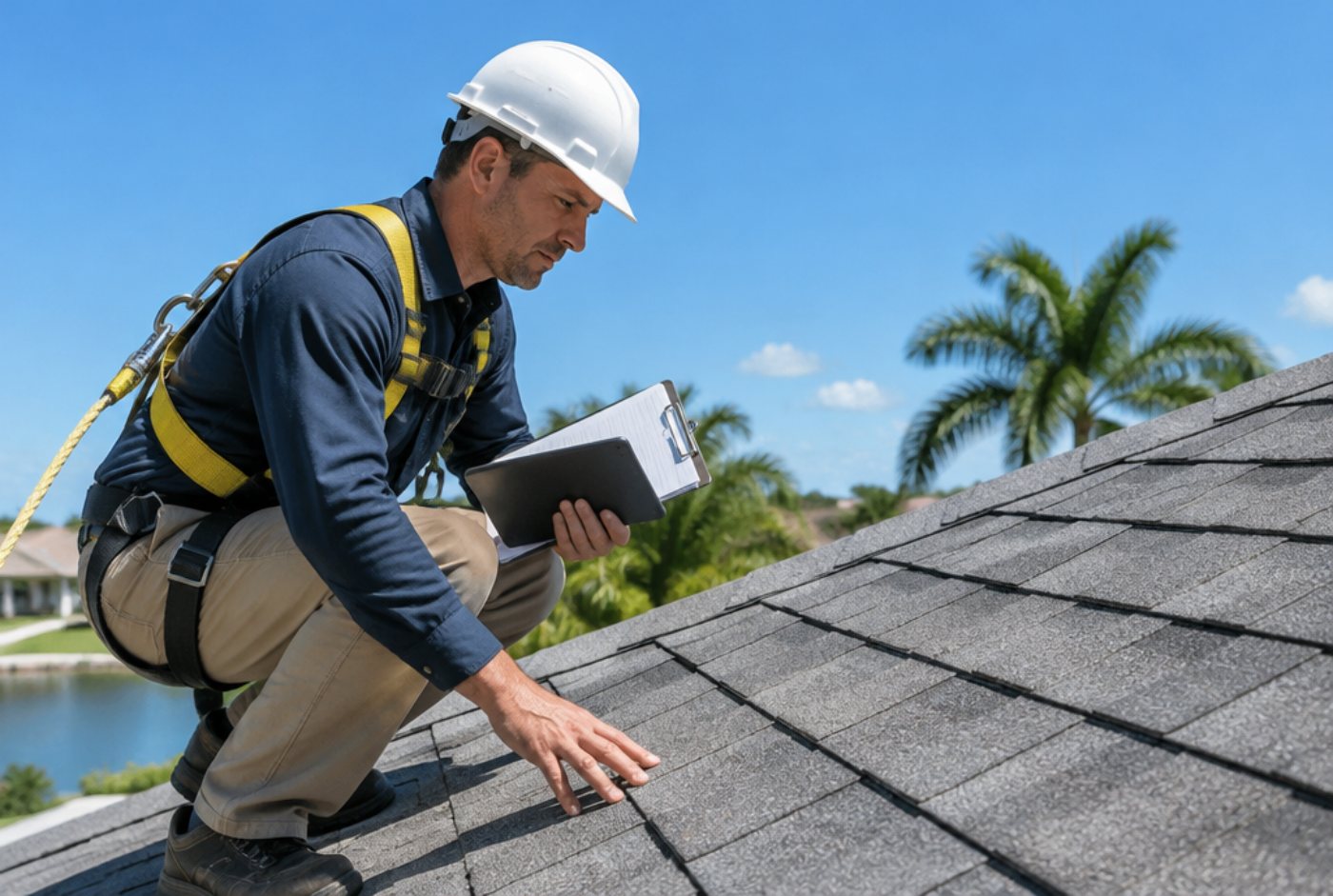
Get a professional roof inspection
Even if the roof looks fine, have a licensed roofer check it. Storm damage often hides under shingles and tiles, and small problems left alone turn into leaks, rot and mold months later.
A thorough inspection should cover every one of these, and the findings should come to you in writing with photos:
- Roof covering: shingles, tiles or metal panels, checked for cracks, lifting, granule loss and fastener pull-through
- Underlayment and roof deck: soft spots, water staining and moisture beneath the surface
- Flashing and penetrations: chimneys, skylights, vents, pipe boots, valleys and wall transitions
- Ridge, hips and edges: caps, drip edge and rake edges where wind lifts a roof first
- Gutters, fascia and soffits: alignment, attachment and water flow
- Attic: daylight, wet insulation, stained rafters and ventilation problems
You will leave with a clear answer: what is damaged, whether it needs a repair or a replacement, and what each option costs.
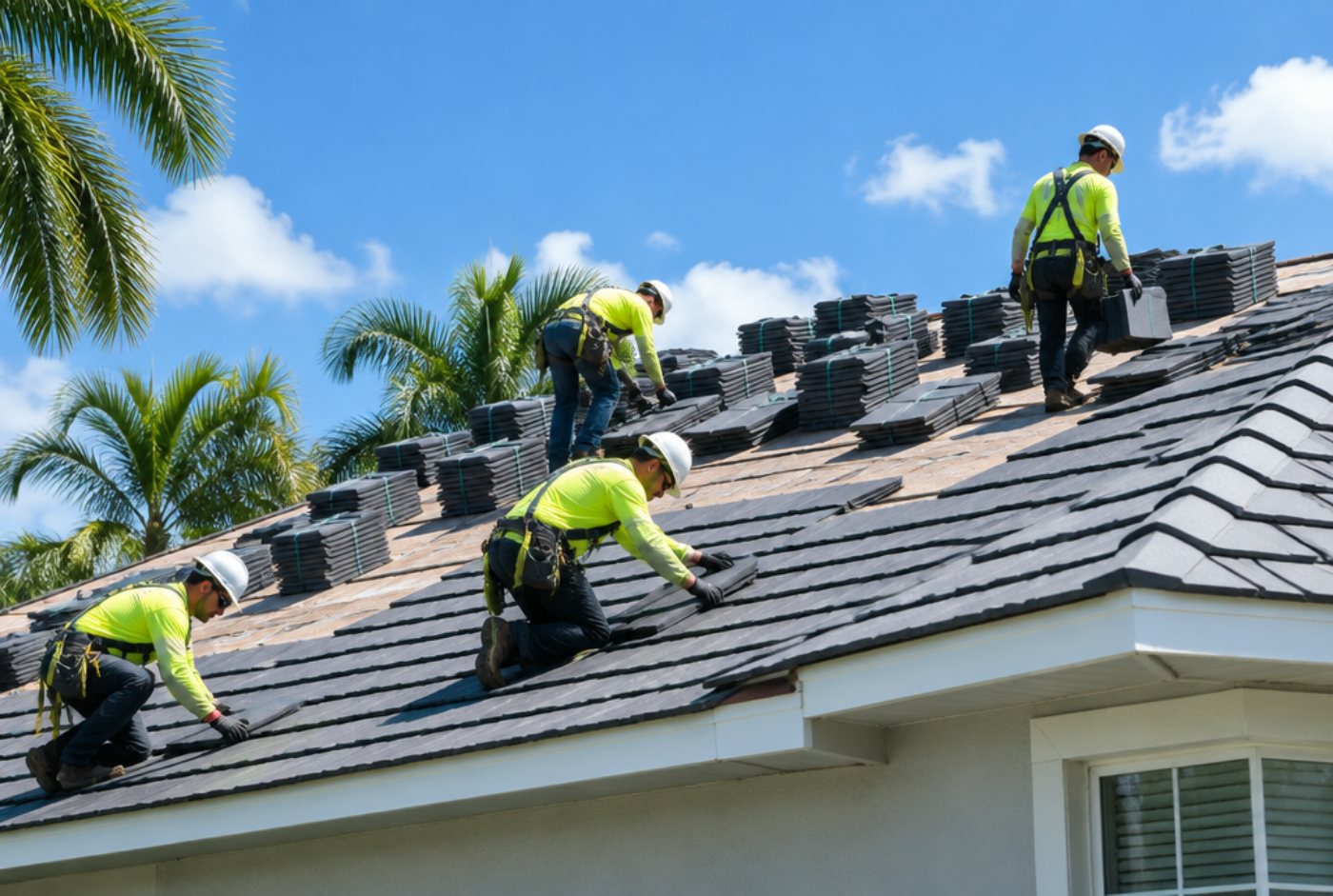
Repair, replace and strengthen your roof
With the inspection in hand and your claim moving, you can choose how to fix the roof. The right answer depends on the age, the extent of the damage and what your policy covers.
- Repair is usually enough when damage is limited to a small area and the rest of the roof is in good condition.
- Replacement makes sense when damage is widespread, the roof is near the end of its life, or the deck beneath is compromised.
- Permits and code: roofing work in Florida requires a permit, and current code may require upgrades. A licensed contractor handles this for you.
- Scheduling: after a major storm, demand is high and materials can take weeks. Early inspections and signed work orders keep you near the front of the line.
- Upgrade while you are up there: stronger fastening, a secondary water barrier, wind-rated shingles, impact-resistant products or metal roofing can improve storm resistance and may qualify for insurance savings. Ask for a wind mitigation inspection afterward.
- Protect the rest of the system: gutters, insulation, ventilation and waterproofing often need attention after a storm too.
Roof repairs
Fast, careful repairs for missing shingles and tiles, leaks, flashing and storm punctures.
Roof replacement
Complete replacements with quality materials, permits handled and a workmanship warranty.
Gutters
Reattached, repaired or replaced gutters and downspouts to move water away from the home.
Insulation
Replacement of wet or compressed insulation to restore comfort and energy efficiency.
Waterproofing
Sealing and barrier systems that keep the next storm's water outside.
Roof ventilation
Better attic airflow that reduces heat, humidity and moisture-related damage.
Storm damage? Get a free roof inspection today
Our licensed team will inspect your roof, document the damage with photos and give you a clear, honest recommendation, with no pressure and no obligation.